
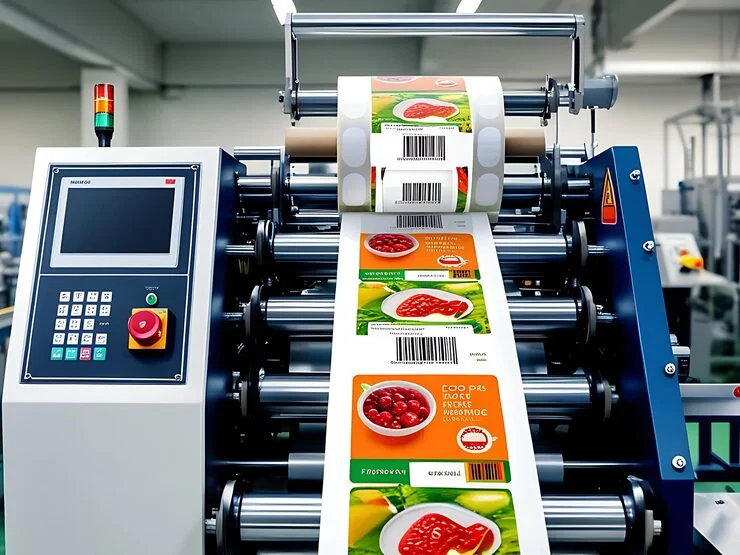
High-Quality Label Printers in Dubai & UAE
Businesses across retail, logistics, manufacturing, healthcare, e-commerce and other industries rely on accurate labelling for product identification, inventory management, packaging and shipping. Choosing the right label printer can improve printing speed, reduce operational interruptions and help maintain consistent label quality.
Ribbon House supplies label printing solutions from established brands including Citizen, TSC, Zebra and Brother, with options for different printing volumes, label sizes and business applications. Along with printers, businesses can source compatible labels, thermal ribbons and other printing consumables.
If you are comparing the best label printers in Dubai, the right choice depends on factors such as print volume, label material, printing technology, connectivity and the type of information you need to print.
For businesses looking beyond printer hardware, our solutions can also support sticker printing in UAE for product identification, packaging, barcode and promotional applications.
Need help choosing a label printer? Contact Ribbon House for a suitable solution based on your printing requirements.
Label Printers We Supply
Ribbon House offers label printers from recognised manufacturers to support everything from everyday retail labelling to demanding industrial applications.
Citizen Label Printers
Citizen label printers are designed for businesses that require dependable barcode and label printing across medium- and high-volume workflows. Their range includes models suitable for different print speeds, media sizes and operating environments.
Citizen printers can be used for applications such as:
- Barcode printing
- Product labelling
- Inventory identification
- Shipping labels
- Retail labels
- Warehouse labels
- Industrial identification
TSC Label Printers
TSC label printers provide options for businesses requiring reliable thermal printing across retail, logistics, manufacturing and other commercial environments.
Depending on the model, TSC printers can support different media widths, print volumes and connectivity requirements. Industrial models can be considered where businesses need consistent printing during demanding workflows.
Zebra Label Printers
Zebra is a recognised name in barcode and label printing, with printer solutions designed for retail, logistics, warehousing, manufacturing and enterprise applications.
The range includes compact desktop printers as well as more robust industrial models, allowing businesses to select equipment according to their workload and operating environment.
Brother Label Printers
Brother offers specialist labelling solutions for businesses and professionals that need portable, desktop or industrial labelling equipment.
Its printer range can be particularly useful for applications involving electrical, datacom, cable and equipment identification, depending on the model and compatible media.
How to Choose the Best Label Printers in Dubai
There is no single label printer that is ideal for every business. The right model depends on how frequently you print, what type of labels you use and where the printer will operate.
Consider Your Printing Volume
A small retail business with occasional labelling requirements may need a compact desktop printer, while a warehouse or manufacturing facility producing thousands of labels may require an industrial model.
Before purchasing, consider:
- Labels printed per day
- Required print speed
- Peak printing periods
- Number of users
- Expected printer lifespan
- Working environment
Check Print Speed and Resolution
Print speed becomes increasingly important as printing volumes increase. However, speed should be considered alongside print quality and resolution.
For barcode and product identification, the printer should produce clear and consistent output that can be scanned reliably.
Check Label Size and Media Compatibility
Different applications require different label dimensions and materials. Before selecting a printer, check its supported print width and media specifications.
The printer should be compatible with the labels required for your application, whether you need small product labels, shipping labels, barcode labels or larger industrial identification labels.
Choose the Right Connectivity
Depending on your workplace, you may require USB, Ethernet, Wi-Fi or other connectivity options.
A warehouse with several workstations may have different connectivity requirements from a small shop using one computer or point-of-sale system.
Consider Software Compatibility
Your label printer should work effectively with the software and systems already used by your business.
Check compatibility with relevant:
- POS systems
- Inventory software
- ERP platforms
- Warehouse management systems
- Barcode software
- Label-design software
Consider Long-Term Operating Costs
The purchase price is only one part of the total cost of ownership.
Consider the ongoing cost of:
- Labels
- Thermal ribbons
- Printheads
- Maintenance
- Spare parts
- Software
- Replacement components
A printer that fits your workflow can help reduce unnecessary operating costs over time.
Not sure which printer matches your workload? Speak with our team for practical product guidance.
Direct Thermal vs Thermal Transfer Label Printers
One of the most important decisions when selecting a thermal label printer is whether you need direct thermal or thermal-transfer printing.
What Is Direct Thermal Printing?
Direct thermal printing creates an image by applying heat directly to specially treated, heat-sensitive labels. It generally does not require a thermal ribbon.
It can be suitable for applications where labels do not need to remain exposed for extended periods, such as certain shipping, delivery, retail and temporary identification applications.
What Is Thermal-Transfer Printing?
Thermal-transfer printing uses a ribbon to transfer the image onto the label material. This can provide greater durability for applications where labels need to withstand factors such as handling, abrasion or environmental exposure.
The appropriate ribbon depends on the label material and application. For compatible consumables, businesses can explore our range of Zebra ribbon suppliers in Dubai.
Which Printing Method Should You Choose?
Choose based on:
| Requirement | Direct Thermal | Thermal Transfer |
|---|---|---|
| Ribbon required | Generally no | Yes |
| Short-term labels | Suitable | Suitable |
| Durable identification | Application dependent | Often preferred |
| Shipping labels | Commonly used | Can be used |
| Industrial labels | Application dependent | Often suitable |
| Long-term exposure | Less suitable for some applications | Often better suited |
The correct choice depends on the label material, expected lifespan and environment in which the label will be used.
Sticker Printing in UAE for Different Business Applications
Labels and stickers are used far beyond simple product identification. Businesses may require printed adhesive materials for packaging, inventory, promotions, shipping, branding and compliance.
Product and Packaging Stickers
Product stickers can display information such as:
- Product names
- Barcodes
- QR codes
- Prices
- Batch information
- Ingredients
- Branding
- Product specifications
Packaging labels can also help businesses maintain consistent product presentation across different product lines.
Barcode and QR Code Labels
Barcode labels allow businesses to identify and track products, stock and shipments. QR code labels can provide access to additional digital information when scanned using a compatible device. Clear printing is important because damaged or poorly printed codes may affect scanning accuracy.
Waterproof and Durable Labels
Certain products require labels that can withstand moisture, handling or environmental exposure. Synthetic materials and suitable printing technologies may be considered for these applications.
Vinyl and Promotional Stickers
Vinyl stickers can be used for branding, promotional campaigns, product identification and other applications where a flexible adhesive material is required.
Die-Cut and Custom Stickers
Businesses with distinctive branding requirements may choose custom-shaped or die-cut stickers rather than standard rectangular labels.
The right material, adhesive and printing method should be selected according to the intended surface and environment.
Which Label Material Should You Choose?
The label material can affect durability, appearance, adhesion and print performance.
Paper Labels
Paper labels are commonly used for everyday retail, inventory and general-purpose applications where extreme environmental resistance is not required.
Synthetic Labels
Synthetic materials can provide additional resistance for applications involving moisture, handling or demanding operating conditions.
Vinyl Labels
Vinyl can be considered where flexibility, visual presentation and resistance are important factors.
Transparent Labels
Transparent labels can create a different visual effect on packaging and products where the underlying surface needs to remain visible.
Choosing the Right Adhesive
The adhesive should match the surface on which the label will be applied. Consider whether the surface is:
- Smooth
- Textured
- Curved
- Plastic
- Glass
- Metal
- Cardboard
The temperature and environmental conditions should also be considered for specialist applications.
Label Printer Applications Across Different Industries
Label printers support a wide range of business processes.
Retail and Supermarkets
Retailers can use labels for product identification, pricing, stock management, shelf information and barcode scanning.
Warehousing and Logistics
Warehouses and logistics companies rely on labels for inventory tracking, shipment identification, location management and package processing.
Manufacturing
Manufacturers may use labels for product identification, components, batches, packaging and internal tracking.
Food and Beverage
Food businesses can require product, packaging, batch and identification labels. The appropriate material and printing method should be selected according to the product and operating environment.
Healthcare and Pharmaceuticals
Healthcare and pharmaceutical operations may use labels for identification, inventory, packaging and tracking applications, subject to their specific operational and regulatory requirements.
Cosmetics and Personal Care
Cosmetic products often require attractive and informative packaging labels containing product, brand and identification information.
E-commerce
Online sellers can use barcode, shipping and product labels to organise fulfilment, inventory and dispatch processes.
Electrical and Datacom
Electrical and networking professionals may require specialist labels for cables, wires, equipment and components. Portable or specialist Brother labelling solutions can be considered for suitable applications.
What Do You Need Alongside a Label Printer?
Buying the printer is only the beginning of a complete labelling setup.
Businesses may also require:
- Compatible labels
- Thermal ribbons
- Label-design software
- Printheads
- Cleaning supplies
- Replacement parts
- Barcode scanners
- Accessories
Selecting compatible consumables can help maintain consistent print quality and reduce avoidable printing issues.
For businesses looking For suitable labels and related products, our DG Label supplier in Dubai solutions provide another part of the complete labelling ecosystem.

Label Printers, Labels and Ribbons: Building a Complete Printing Setup
A reliable labelling workflow normally involves three connected elements: Printer + Label Material + Printing Consumable.
The printer determines how the label is produced, while the label material and ribbon, where applicable, influence print quality and durability.
For example, a business producing durable product identification labels may need a thermal-transfer printer, suitable synthetic media and a compatible resin or wax-resin ribbon.
Choosing these components together can help avoid compatibility problems and unnecessary replacement costs.
Citizen vs TSC vs Zebra vs Brother Label Printers
Different brands have different strengths, and the right option depends on the intended application rather than brand recognition alone.
| Brand | Suitable For | Key Consideration |
|---|---|---|
| Citizen | Retail, commercial and industrial applications | Model-specific speed and media compatibility |
| TSC | Retail, logistics and industrial workflows | Range of desktop and industrial options |
| Zebra | Enterprise, logistics and barcode applications | Broad business and integration ecosystem |
| Brother | Specialist, portable and professional labelling | Strong options for specific identification applications |
When comparing models, look beyond the brand name and consider print volume, resolution, media width, connectivity, software compatibility and consumable requirements.
How Much Does a Label Printer Cost in the UAE?
The cost of a label printer varies according to its technology, brand, specifications and intended workload.
Factors that can influence pricing include:
Desktop or industrial construction
Print speed
Print resolution
Maximum print width
Connectivity
Memory
Duty cycle
Brand
Additional features
Required accessories
The lowest purchase price is not necessarily the most economical choice. Businesses should also consider labels, ribbons, maintenance and expected printing volume when comparing options.
For an accurate recommendation, provide your required label size, estimated printing volume and intended application when requesting a quotation.
Why Choose Ribbon House for Label Printers in Dubai?
Ribbon House provides businesses with access to multiple label-printer brands and related printing products, allowing customers to consider the printer, labels and consumables as part of one solution.
The range includes products from Citizen, TSC, Zebra and Brother, supporting different business requirements and printing environments.
When selecting a solution, the team can help businesses consider factors such as:
Printing volume
Label dimensions
Printing technology
Material compatibility
Required durability
Connectivity
Business application
Consumable requirements
A complete assessment can help you choose equipment that matches your actual workflow rather than simply selecting a printer based on price.
Ready to select the right labelling equipment? Request a quote from Ribbon House today.
Frequently Asked Questions
Quick answers to common queries
A label printer produces printed labels for products, barcodes, inventory, shipping, packaging, identification and other business applications.
A compact desktop label printer is often suitable for small businesses with moderate printing volumes, limited workspace and straightforward labelling requirements.
A barcode printer is designed to produce machine-readable barcodes, while a label printer is a broader category that can print barcodes, text, graphics, product information and other labels.
No. Thermal printers generally do not use conventional liquid ink cartridges. Direct thermal models use heat-sensitive labels, while thermal-transfer models use a ribbon.
Direct thermal printing uses heat-sensitive labels without a ribbon, whereas thermal-transfer printing uses a ribbon to transfer an image onto the label material.
Yes. Compatible label printers can print QR codes when used with appropriate software, media and printer settings. The printed code should have sufficient clarity and contrast for reliable scanning.
Some label printers can print on waterproof or water-resistant synthetic materials. The printer, label media and printing technology should be compatible with the required application.
Compatibility depends on the printer type and specifications. Labels may include paper, synthetic, polypropylene, polyester and other media designed for direct thermal or thermal-transfer printing.
Yes. Thermal-transfer printers use a ribbon to transfer the printed image onto the label material. The ribbon type should match the media and durability requirements.
Warehouses with high printing volumes may benefit from industrial or heavy-duty label printers designed for continuous barcode and inventory labelling workflows.
Check the printer's supported media width and your application's requirements. Consider the amount of text, barcode size, product dimensions and available printing area.
Yes. Label printers can produce product identification, barcode, batch, shipping and packaging labels when the selected printer and media are appropriate for the application.
Thermal transfer is often preferred for applications requiring greater print durability because the image is transferred using a ribbon onto suitable label media. The final performance depends on the media and ribbon combination.
Label printer prices vary according to brand, model, printing technology, speed, resolution and features. Requesting a quote based on your application provides a more useful comparison than relying on a generic price.
Consider your printing volume, label size, material, required durability, print speed, resolution, connectivity, software compatibility, consumable costs and long-term maintenance requirements.
Have questions about label printers, labels or ribbons? Get in touch with Ribbon House for assistance.