
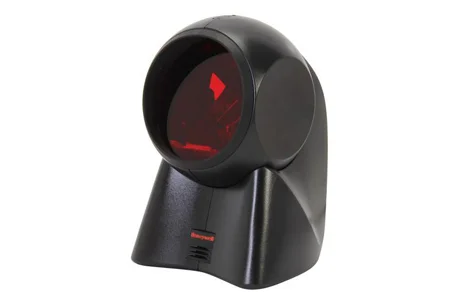
Which Barcode Scanner Features Should You Prioritize in 2026?
Walk into any warehouse, retail store, or logistics hub today, and you’ll find barcode scanners doing the heavy lifting. But not every scanner earns its place. In a market packed with options, knowing what separates a capable device from a costly mistake matters more than ever. If you’re planning to buy barcode scanners online in the UAE, this guide breaks down the features worth your attention- and the ones you can safely skip. Stay with us through the end; the last section might change how you shop.
Decoding the Basics: What Is a Barcode Scanner, Really?
A barcode scanner is a device that uses light- laser, LED, or image-based- to read printed or digital codes and convert them into data your system can process. Think of it as a translator between the physical world and your software. The better the scanner, the faster and more accurately that translation happens.
Feature 1- Scan Engine Type: Laser vs. Imager
The engine inside your scanner determines everything from read speed to scan angle. Laser scanners are fast on 1D barcodes but struggle with damaged or curved labels. Imager-based scanners, both 1D and 2D, capture the entire code as a picture, making them more flexible. For mixed inventory environments, an area imager wins every time. It reads QR codes, damaged labels, and codes on screens without breaking stride.
Feature 2- Connectivity: Wired, Wireless, or Bluetooth?
Your scanner needs to talk to your system. How it does that shapes your entire workflow. USB scanners are reliable and affordable for stationary setups. You get the freedom of movement within a short range with Bluetooth scanners, which makes them ideal for smaller spaces. For warehouses with wide floor plans, opt for scanners with 2.4GHz wireless connectivity- they hold signals across longer distances and don’t drop data mid-scan.
Feature 3- Reading Range and Depth of Field
A scanner that can’t reach the barcode on your tallest shelf is more frustrating than a tool. Short-range scanners work well at checkout counters and desk setups. Medium to long-range scanners are built for warehouse shelving, distribution centers, and outdoor inventory work. Always check the depth of field specification- it tells you the minimum and maximum scanning distance the device can handle accurately.
Feature 4- Durability Ratings and Drop Resistance
In real-world use, scanners get dropped. Budget for one that survives it. Look for an IP rating (Ingress Protection) that covers dust and moisture. For industrial environments, choose scanners rated IP54 or above. Drop resistance ratings matter too- a scanner certified for 1.5-meter drops handles daily warehouse use comfortably. By spending slightly more upfront, you can protect yourself from replacement costs down the line.
Feature 5- Software Compatibility and Integration
The most powerful scanner becomes useless if it doesn’t talk to your existing system. Check whether the scanner supports the HID (Human Interface Device) protocol, which makes it plug-and-play with most software. For ERP or inventory management platforms, SDK support matters. Some vendors also offer companion software. Think of compatibility the way you’d think of business card printing in Dubai– the design means nothing if it doesn’t match your brand’s communication system.
Feature 6- Battery Life for Wireless Models
Dead batteries in the middle of a shift cost you more than time- they cost accuracy. For cordless scanners, look for a minimum of 12-hour battery life per charge with fast-recharge capability. Hot-swappable batteries are a bonus for operations that run 24-hour shifts. Check the standby time too- scanners that drain quickly during idle periods become an operational headache fast.
Final Word: Scan Smarter, Not Just Faster
Choosing the right barcode scanner is less about chasing specs and more about matching the device to your environment, software, and volume. Prioritize scan engine quality, connectivity range, durability, and integration before anything else. When you’re ready to buy barcode scanners online in the UAE, take this checklist with you- and you’ll make a decision you won’t need to revisit next year.
Frequently Asked Questions
Can one barcode scanner read both 1D and 2D codes?
Yes, 2D imager-based scanners read both formats. They handle QR codes, Data Matrix, and traditional barcodes without needing separate devices or additional configuration.
What is the difference between Bluetooth and 2.4GHz wireless scanners?
Bluetooth pairs directly with devices over short distances, while 2.4GHz scanners use a USB dongle and maintain a stronger signal across larger warehouse-scale environments.
Are barcode scanners compatible with all kinds of operating systems?
Most HID-compliant scanners work across Windows, Mac, and Linux. Always verify SDK or driver availability if your system runs custom or proprietary software.
How often should barcode scanners be replaced?
With proper care, quality scanners last five to seven years. High-volume industrial settings may require earlier replacement due to physical wear on the scan window.
Is scanner resolution important for reading small barcodes?
Absolutely. High-resolution imagers handle micro barcodes on components or pharmaceutical packaging with accuracy that standard-resolution scanners simply cannot match.
“`html
“`
Latest Posts
October 7, 2026
Have you ever...
October 7, 2026
Ever had a...

September 23, 2026
A thermal ribbon...

September 23, 2026
One misplaced label,...

September 7, 2026
A glass bottle...