
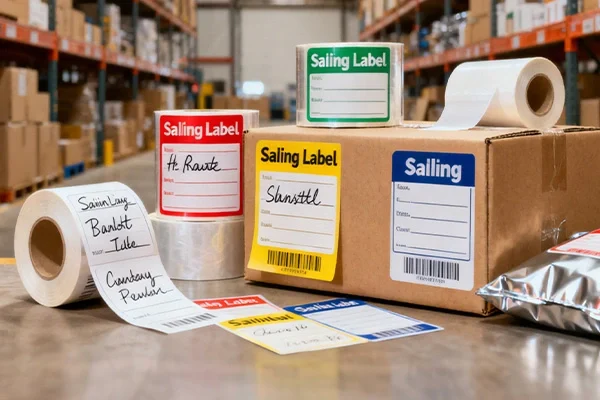
Why Choosing the Right Shipping Labels in UAE Matters for Faster Deliveries
Ever had a package delayed because the address was difficult to read, the barcode would not scan, or the label simply peeled off during transit? For businesses handling dozens or thousands of shipments, these small problems can quickly become expensive.
That is why choosing the right Shipping Labels in UAE is more important than it may seem. A good shipping label does more than display an address. It helps packages move through warehouses, sorting centres, delivery networks, and customer locations with fewer mistakes.
What Makes Shipping Labels So Important?
A shipping label contains the information needed to identify and route a package correctly. Depending on the business and shipping requirements, it may include:
- Sender and recipient details
- Shipping address
- Barcode or QR code
- Tracking number
- Package information
- Handling instructions
- Delivery or routing information
When these details are printed clearly and remain readable throughout transportation, employees can scan and process packages faster.
Poor-quality labels, on the other hand, can create scanning problems, misplaced shipments, delivery delays, and unnecessary reprinting.
Why Businesses in the UAE Need Reliable Shipping Labels
The UAE has a fast-moving retail, logistics, manufacturing, and e-commerce environment. Businesses regularly ship products between warehouses, stores, offices, and customers across the Emirates.
A reliable label needs to perform throughout this process.
1. Clear Barcodes Improve Scanning
A barcode is one of the most important parts of a shipping label. If it is blurred, faded, scratched, or printed with insufficient contrast, scanners may struggle to read it.
High-quality labels combined with the right printing method help produce sharp and consistent barcodes. This makes package identification and tracking more efficient.
2. Labels Need Strong Adhesion
A label may pass through multiple handling points before reaching its destination. It can be exposed to friction, dust, humidity, temperature changes, and repeated handling.
If the adhesive is not suitable for the packaging surface, the label can peel away or become damaged.
The right adhesive and label material help keep shipping information securely attached to the package throughout its journey.
3. Better Labels Can Reduce Shipping Errors
Imagine a warehouse employee handling hundreds of packages every day. If labels are difficult to read or barcodes repeatedly fail to scan, mistakes become much more likely.
Clearly printed shipping labels make it easier for warehouse teams and delivery personnel to identify packages quickly. This can help reduce sorting mistakes and improve overall workflow.
What Types of Shipping Labels Can Businesses Use?
Different shipping requirements call for different label materials and printing formats.
Direct Thermal Shipping Labels
Direct thermal labels are commonly used for applications where information does not need to remain unchanged for extremely long periods. They can be useful for shipping, delivery, receipts, and short-term identification.
Thermal Transfer Shipping Labels
Thermal transfer labels use a ribbon to transfer ink onto the label surface. They can provide greater durability when labels need to withstand more demanding handling or environmental conditions.
Self-Adhesive Shipping Labels
Self-adhesive labels are designed for quick application and are widely used across logistics, warehousing, retail, and e-commerce operations. The material and adhesive can be selected according to the packaging surface and application.
How Can the Right Shipping Labels Improve E-Commerce Operations?
For an e-commerce business, the package is often the first physical interaction a customer has with the company.
A damaged or poorly printed label can make the entire delivery look less professional.
High-quality shipping labels can help businesses:
- Keep tracking information readable
- Speed up package processing
- Reduce barcode scanning issues
- Maintain a professional appearance
- Minimise relabelling and reprinting
- Improve warehouse organisation
For businesses processing large order volumes, even a small reduction in labeling errors can make a noticeable difference.
What Should You Check Before Ordering Shipping Labels in UAE?
Not every shipping label is suitable for every business. Before placing an order, consider the following factors.
Label Size
Choose a size that provides enough space for the address, barcode, tracking number, and other required information without making the label unnecessarily large.
Label Material
Paper labels may be suitable for many standard applications, while synthetic materials can be considered when greater resistance to moisture, abrasion, or demanding conditions is required.
Adhesive Type
The adhesive should match the packaging surface. A label that works well on cardboard may not perform identically on plastic, glass, metal, or textured packaging.
Printer Compatibility
Always check whether the labels are compatible with your printer. Incorrect label dimensions or unsuitable media can result in feeding problems, poor alignment, and wasted material.
Printing Requirements
Consider the volume and speed of your operation. A business processing hundreds of packages daily may have different requirements from a small company shipping a few orders each week.
Why Quality Matters More Than the Lowest Price
Choosing the cheapest label available may appear to reduce packaging costs, but the real expense can appear later.
Frequent barcode failures, peeling labels, reprints, printer issues, and shipment errors can consume valuable time and resources.
The better approach is to consider the total value of the label rather than only its purchase price.
A reliable label should provide the combination of:
- Consistent print quality
- Suitable adhesive
- Printer compatibility
- Appropriate durability
- Accurate sizing
- Reliable barcode readability
How Can a Reliable Label Supplier Help?
A professional supplier can help businesses select labels based on their printer, packaging material, application, and expected operating conditions.
Ribbon House provides a broad range of label solutions, including barcode, direct thermal, thermal transfer, synthetic, product, pharmaceutical, and variable-data labels for different business applications.
This type of product range allows businesses to choose a labeling solution based on actual operational requirements rather than simply selecting a standard label.
The Bottom Line!
Shipping labels may look like a small part of the delivery process, but they play a major role in keeping packages identifiable, trackable, and organised.
For businesses operating in the UAE, investing in reliable Shipping Labels in UAE can help improve barcode scanning, reduce labeling problems, support smoother warehouse operations, and create a more professional delivery experience.
The key is simple: choose labels based on your printer, packaging, adhesive requirements, durability needs, and shipping environment. When the right label is matched with the right application, every shipment has a better chance of reaching its destination accurately and efficiently.
FAQs
What are shipping labels used for?
Shipping labels provide important package information such as the delivery address, tracking number, barcode, and handling details. They help warehouses, couriers, and delivery teams identify and process shipments efficiently.
Which material is best for shipping labels?
The appropriate material depends on the shipping environment. Paper labels can work well for many standard shipments, while synthetic materials may be more suitable when labels require greater resistance to moisture, abrasion, or difficult conditions.
Are shipping labels compatible with thermal printers?
Yes, many shipping labels are specifically designed for thermal printers. However, businesses should check the printer model, label dimensions, printing technology, and media specifications before ordering.
Why do shipping labels sometimes peel off?
Peeling can occur when the adhesive is unsuitable for the packaging surface or when the package is exposed to moisture, heat, friction, or rough handling. Choosing the appropriate adhesive and label material can help prevent this problem.
Can businesses order custom-sized shipping labels in the UAE?
Yes. Shipping labels can be produced in different sizes and specifications depending on the printer, packaging, barcode requirements, and business application.
How can high-quality shipping labels reduce business costs?
Reliable labels can reduce reprinting, barcode scanning failures, relabelling, and shipping errors. For businesses processing high shipment volumes, these improvements can help save time and operational costs.
Latest Posts
October 7, 2026
Have you ever...
October 7, 2026
Ever had a...

September 23, 2026
A thermal ribbon...

September 23, 2026
One misplaced label,...

September 7, 2026
A glass bottle...